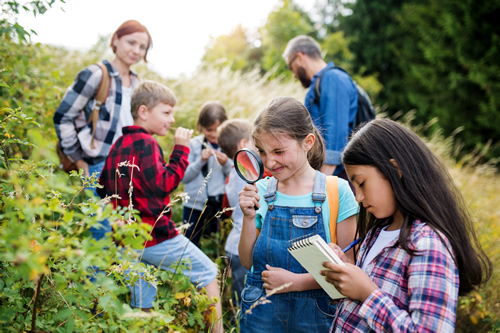
3 ways to bring equity to STEM education

STEM education is essential even if students don't pursue STEM careers--here are some strategies to make it more accessible and equitable for all students

Progress for the STEM education movement must continue to improve, especially for students in underrepresented communities hard hit by COVID-19. We know that STEM-related education holds opportunities for students, but STEM learning must become more evenly distributed.

It’s imperative that we address barriers to STEM education now so that students won’t suffer later. Here are three ways we can bring equity to STEM education.

1. Prioritize educator support

Educators, like their students, are constantly learning. If we want to support every student, we must first ensure that teachers are equipped to do so. Every educator should have access to tools and support to grow.

Related content: 3 ways to teach STEM in a blended environment

Engage in key topics, like STEM and interdisciplinary learning, with the all new professional development eLearning series delivering teaching strategies that focus on student-centered approaches to learning, with the goal of connecting all students – especially those from underrepresented populations – to success in school and beyond.



Udimi - Buy Solo Ads from eSchool News https://ift.tt/3jIkRou
via IFTTT

Comments

Popular posts from this blog

Author discusses book on grad school

Graduate school is a great mystery to students, and to some faculty members, says Jessica McCrory Calarco, the author of A Field Guide to Grad School: Uncovering the Hidden Curriculum (Princeton University Press). Calarco is an associate professor of sociology at Indiana University. She believes many faculty members (as well as graduate students, of course) will benefit from her book. She responded to questions via email. Q: How did you get the idea to write this book? Why did the issue speak to you? A: This book started as a tweet . Or, rather, as a series of tweets about the hidden curriculum of higher ed. Ph.D. student Kristen K. Smith had tweeted about the need to better educate undergrads about grad school opportunities, and it made me think about how opportunities in academe are often hidden from grad students, as well. Reflecting on my own experiences in grad school, I thought about the many times I'd found myself embarrassed because of what I didn't know -- the ...

Tips and Strategies for Remote Learning (March 2020)

For the past four weeks, starting two weeks before our Spring Break last week, teachers, administrators and staff at our school have been preparing for “remote school” for students as a result of the coronavirus / COVID-19 crisis. On March 19, 2020, our Head of School sent out a letter to our parents including information about our remote learning plans and FAQs for parents . If your school is currently preparing for remote learning ( as all Oklahoma public school districts now appear to be , pending tomorrow’s state school board meeting vote) I encourage you to review these publicly shared documents and information. As our school’s “Technology Integration and Innovation Specialist” this year, I’ve been building an instructional site for our teachers to support remote learning, on support.casady.org , which is openly licensed CC-BY . This collaborative effort with many other teachers and members of our school staff has provided a good opportunity to curate as well as present instruc...

5 Tips for Embracing Outdoor Learning in Any Setting

In a year when all schools look different from usual, some teachers are embracing the outdoors as their classroom. The Centers for Disease Control and Prevention included outdoor learning in recommended strategies for schools to reduce the spread of COVID-19, and research has shown positive instructional outcomes from such methods. Long-time outdoor educators also tout the social and emotional benefits . But getting started can feel daunting. Below are five tips from experienced teachers for trying outdoor learning in any setting. Look for possibilities in different spaces Becky Schnekser is teaching K-5 science fully outdoors this year at a private school in Virginia Beach. She has the advantage of a well developed outdoor classroom, but that’s not a prerequisite. “Any outdoor space is an opportunity, whether you have a beautiful wooded area or you have concrete jungle,” she said. From sidewalk math to history walks to socially distanced singing , educators are finding wa...